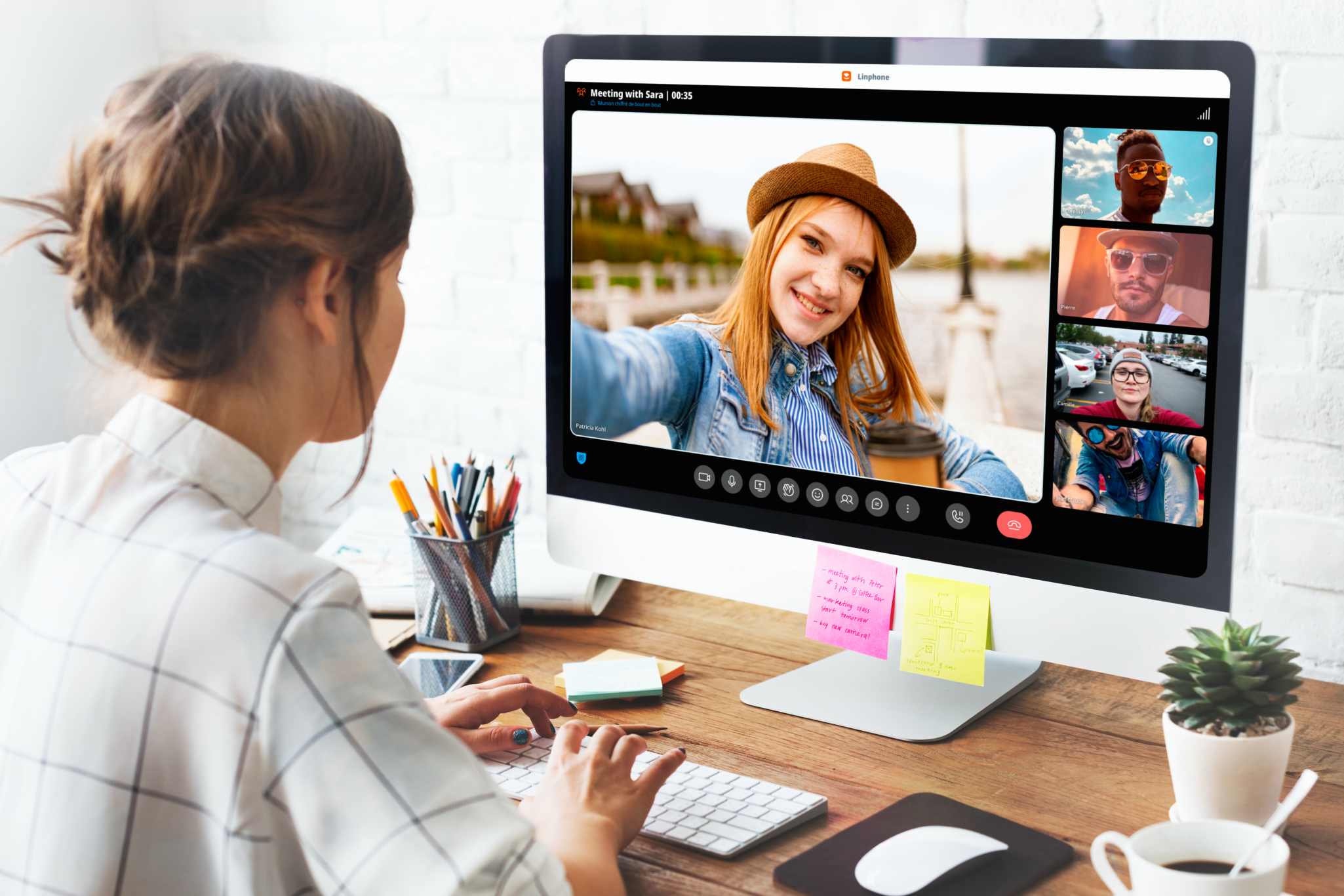
Découvrez les fonctionnalités de Linphone !
La solution complète pour vos communications par internet, personnelles ou professionnelles.
Votre solution tout-en-un pour des échanges de qualité
Optimisez vos communications en temps réel avec Linphone.
Mobile et tablette
Ordinateur de bureau
Version web (à venir⏳)
Linphone : la solution de téléphonie VoIP pour les entreprises
Linphone offre une interface intuitive et des fonctionnalités avancées, conçues pour simplifier vos échanges au quotidien et renforcer la collaboration au sein de votre organisation. Depuis son lancement en 2001, Linphone ne cesse d’évoluer, avec des mises à jour régulières enrichies de nouvelles fonctionnalités.
Découvrez notre palette de fonctionnalités
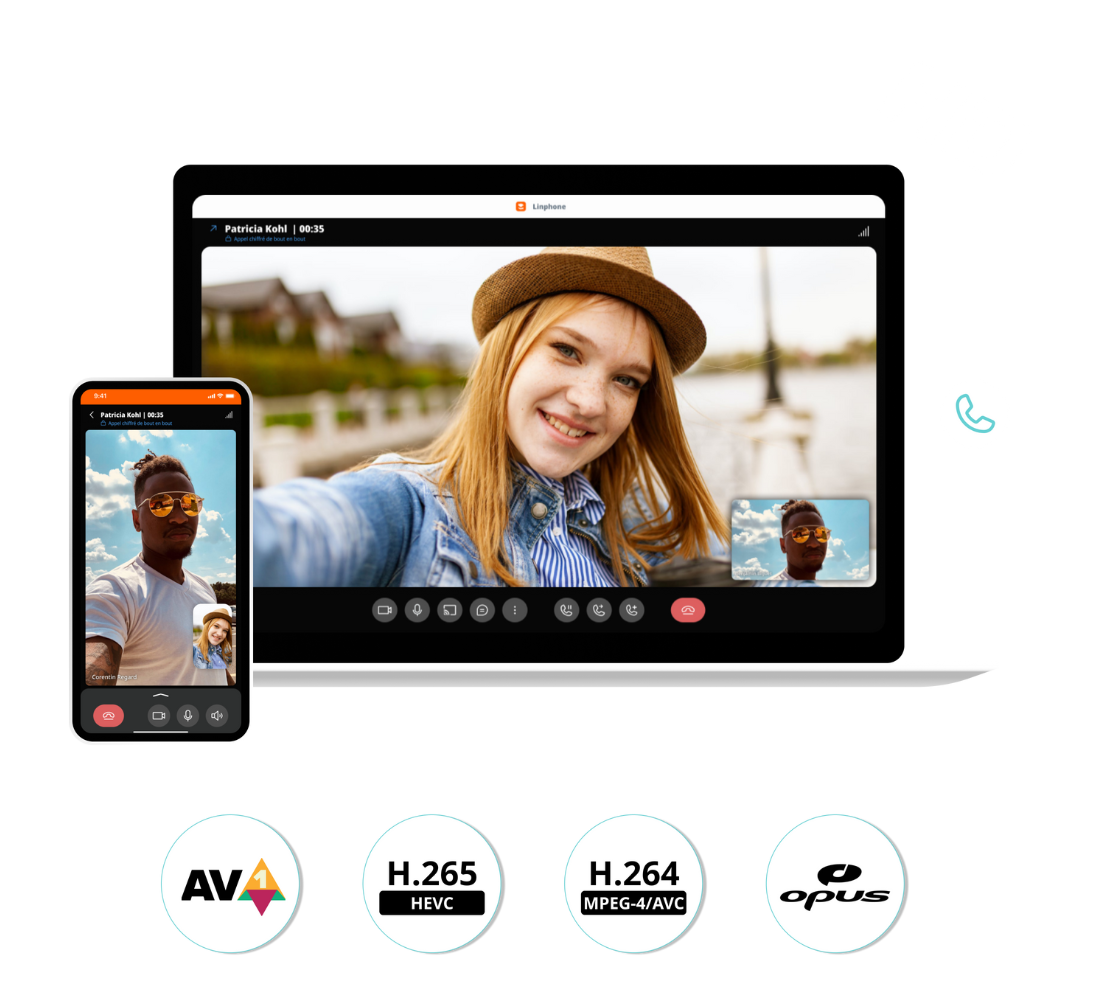
Appels audio et vidéo HD
Profitez d'appels HD pour des communications fluides, où que vous soyez.
Support de codecs HD : Opus pour l'audio et AV1, H265 et H264 pour la vidéo
Algorithmes innovants d'adaptation dynamique des flux media aux conditions du réseau
Annulation d'écho logicielle ou matérielle, en fonction des capacités du matériel
Intégration des dernières technologies innovantes en matière de correction d'erreur, par exemple le mécanisme de Forward Error Correction (FEC)
Mode d'affichage des appels vidéo en plein écran, avec une résolution jusqu'à 1080p
Sélection dynamique des codecs basée sur les capacités des plateformes
Relai d'appel automatique et transparent en cas de changement de type de réseau (par exemple, démarrer un appel en wifi et continuer en 3G/4G)
Indicateur de qualité d'appel et affichage des statistiques d'appel
Codec G729, compression efficace de la voix sans réduire la qualité, idéal pour optimiser l'utilisation de la bande passante lors d'un appel vers ou depuis le réseau de téléphonie classique

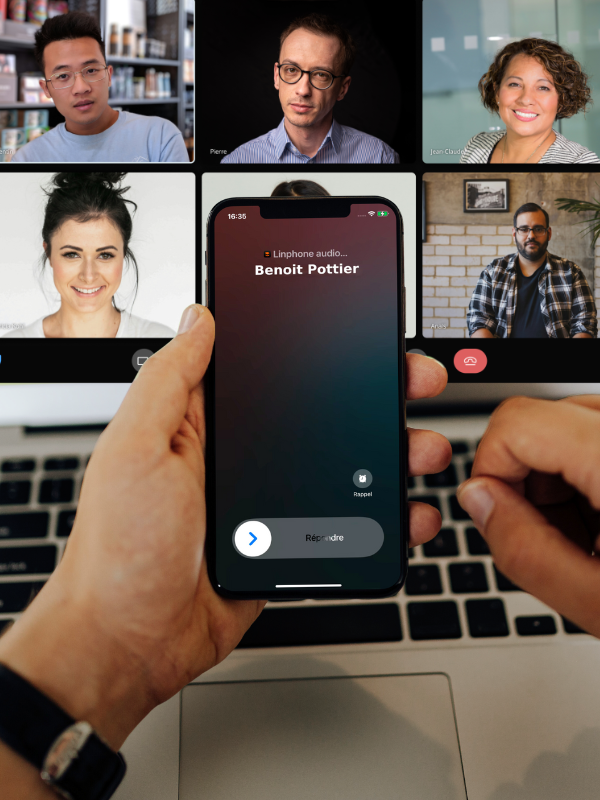
Réunions et appels de groupe
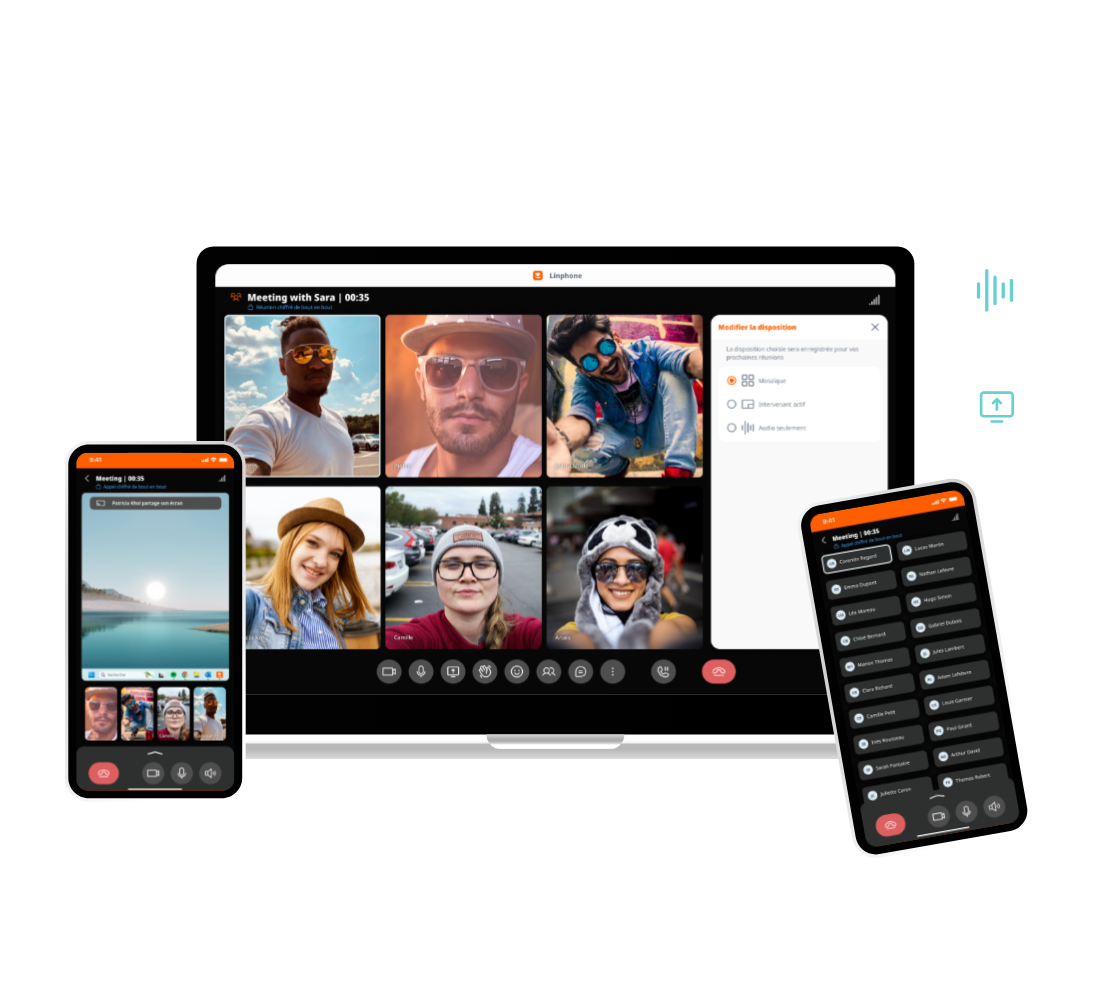
Planifiez vos réunions et lancez des appels vidéo de groupe en toute simplicité.
Pour les personnes qui souhaitent utiliser Linphone avec un serveur tiers, Linphone offre des fonctionnalités de conférence audio simple par fusion de plusieurs appels.
Choisissez notre serveur Flexisip ou notre offre SaaS pour bénéficier de toutes les fonctionnalités de visioconférence.
Jusqu'à 50 participants
Avec notre serveur de conférence SFU moderne, profitez de visioconférences fluides et de haute qualité, même jusqu’à 50 participants simultanément.
Trois modes d’affichages
- Mosaïque, visualisez tous les participants simultanément
- Intervenant actif, mise en avant de la personne qui parle
- Audio uniquement, sans vidéo pour une meilleure qualité de son
Partage d'écran
Montrez le contenu de votre écran ou une fenêtre de votre bureau lors des conférences.
Gestion des participants
Gérer la liste des participants en amont ou pendant l’appel et nommer d’autres administrateurs.
Mode de diffusion en direct
Partagez des présentations ou événements en temps réel.
Prochainement disponible ⏳
Discussion en conférence
Favorisez l’interaction par écrit pendant les réunions entre les participants, en ouvrant notamment une fenêtre de discussion.
Prochainement disponible ⏳
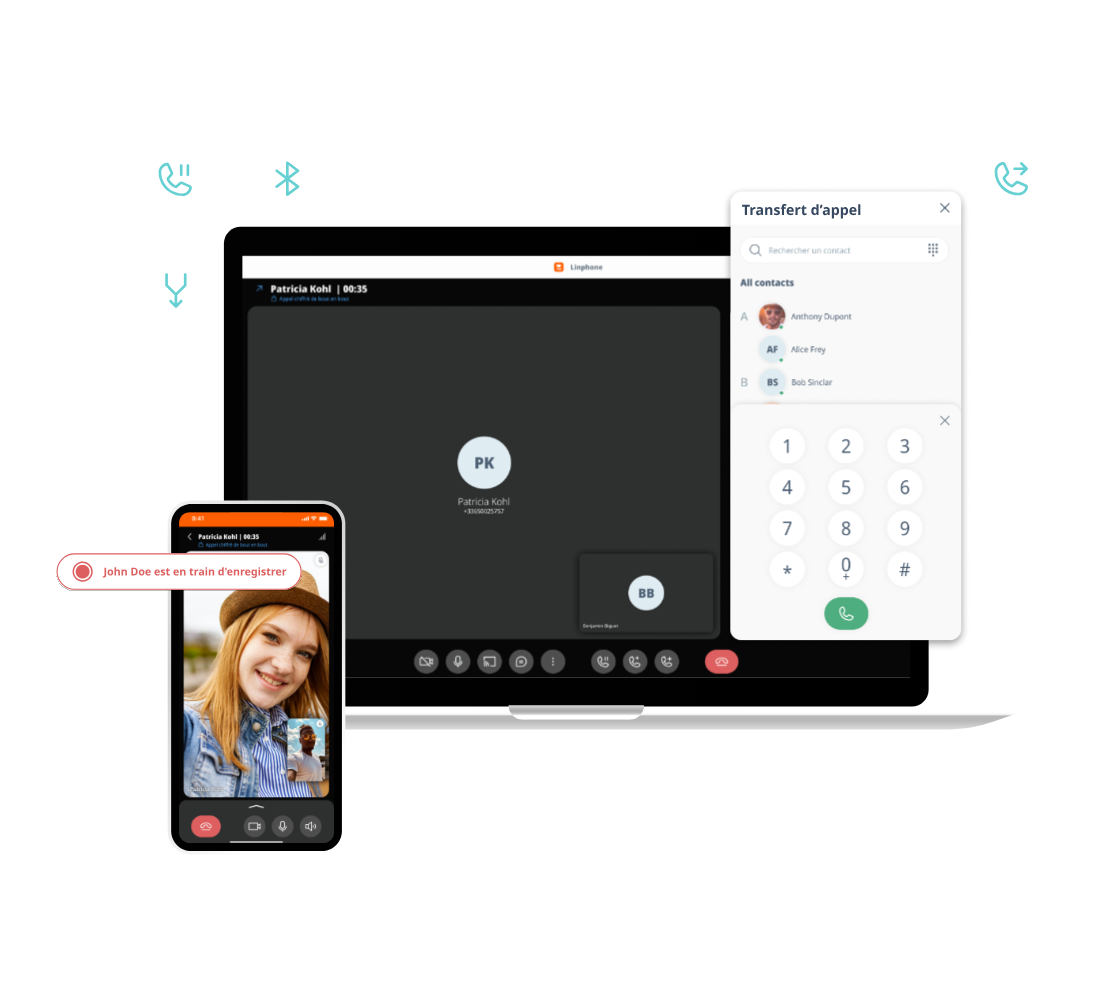
Gestion d'appels
Des fonctionnalités pour faciliter la gestion des appels en environnement professionnel
Historique d'appels
Transfert d'appel aveugle et assisté
Gestion de plusieurs appels en parallèle (mise en pause avec musique d'attente, liste d'appels)
Enregistrement des appels (audio et vidéo) avec fonctionnalité de lecture dans l'application
Réponse automatique pour décrocher les appels, idéal pour les centres d'appels
Tonalités d'appel (DTMF)
Indicateur de Message vocal en Attente (MWI)
Support des casques Bluetooth
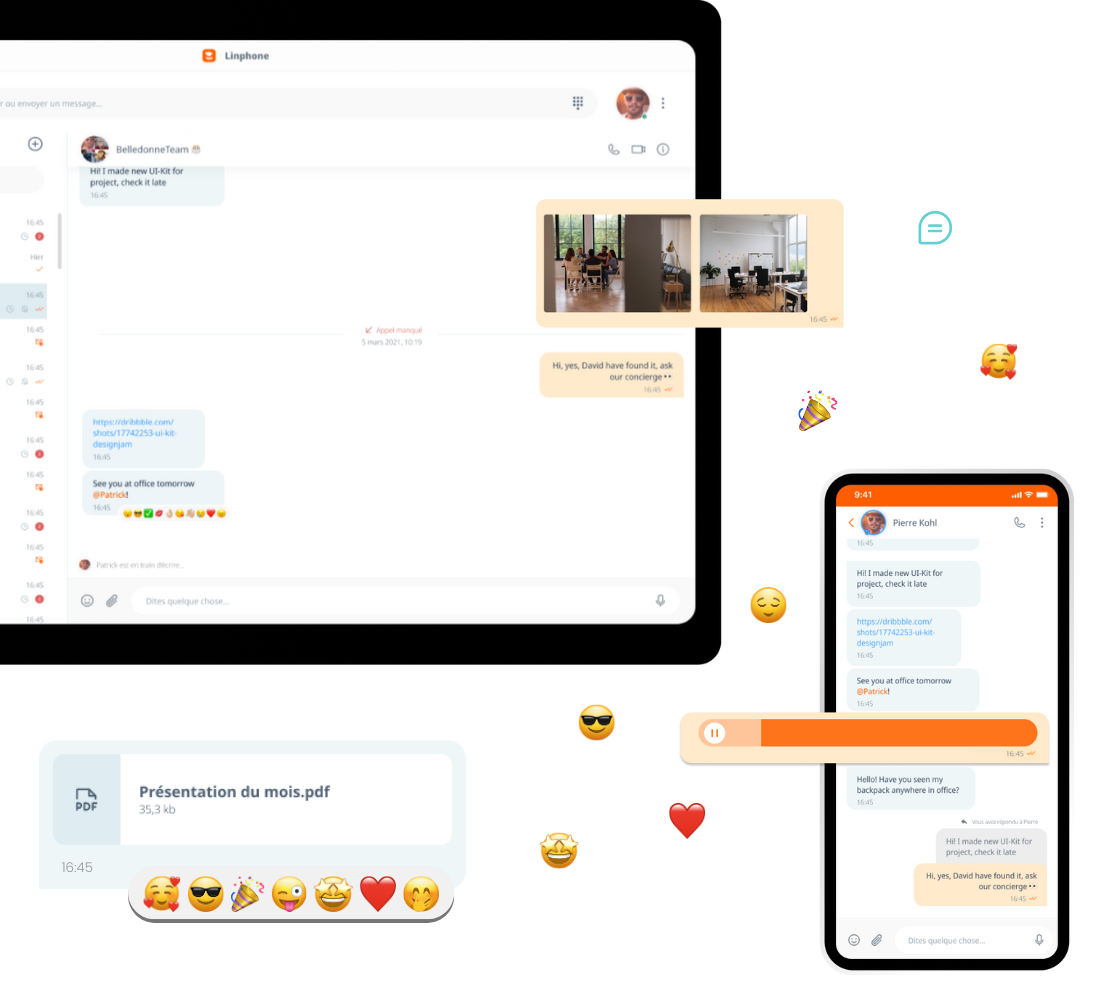
Messagerie instantanée (IM)
Échangez en temps réel avec un chat qui favorise les interactions
Linphone offre des fonctionnalités de messagerie collaborative, qui nécessitent l’utilisation de notre serveur Flexisip. Stimulez les interactions grâce aux conversations individuelles ou de groupe, le partage de fichiers et les réactions.
Vous souhaitez utiliser un autre serveur ou un compte fourni par un tiers ? Linphone propose également une fonctionnalité de messages simples 1-1, basée sur le protocole SIP SIMPLE.
Conversations individuelles et de groupe
Accusés de réception et de lecture (IMDN)
Partage de fichiers (photos, vidéos, documents, gifs)
Espace dédié aux médias et documents dans une conversation pour retrouver ses fichiers en un clic
Envoi de messages vocaux
Interactions : transfert de message, citations, réactions
Messages éphémères
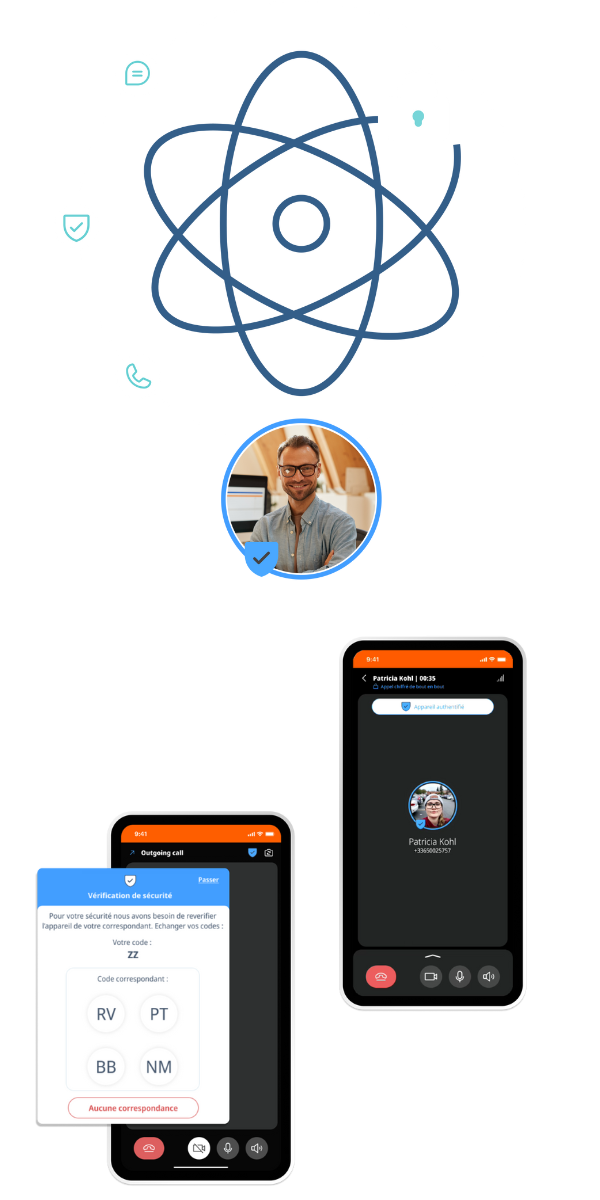
Communications sécurisées aujourd'hui et demain
Assurez la confidentialité des échanges grâce à notre technologie de pointe
Linphone représente l’état de l’art en matière de sécurisation des communications en temps réel. Il offre une authentification sécurisée, un chiffrement de-bout-en-bout pour tous les types de médias échangés, y compris lors des conférences, et une résistance face aux menaces des futurs ordinateurs quantiques.
Authentification sécurisée des utilisateurs
Linphone supporte plusieurs méthodes d’authentification permettant de valider l’identité des différentes parties prenantes d’une communication : les applications qui émettent ou reçoivent un appel ou un message et le serveur qui relaie ces communications.
- Vérification de l’authenticité du serveur SIP basée sur des certificats x509.
- Vérification de l’identité de l’utilisateur via une authentification par algorithme de hachage (SHA-256) ou certificat TLS.
- Connexion sécurisée entre le client (utilisateur) et le serveur grâce à SIP/TLS
Chiffrement de-bout-en-bout des appels audio/vidéo, des messages et des fichiers partagés
Notre technologie de chiffrement de-bout-en-bout des données échangées (voix, vidéo, texte) garantit la confidentialité de vos communications, même en cas de compromission du serveur.
- Support des protocoles de chiffrement standardisés SRTP, SRTP-DTLS et ZRTP
- Chiffrement moderne basé sur Diffie-Hellman à courbes elliptiques (ECDH)
- Chiffrement de bout-en-bout de la messagerie asynchrone basé sur des clés pré-positionnées et l’algorithme du double ratchet, dérivé du protocole Signal.
- Détection des attaques de type « homme-du-milieu » basée sur une confidentialité supplémentaire de ZRTP (code SAS)
- Compatible avec WebRTC
Chiffrement post-quantique
L’application Linphone est probablement le premier logiciel open source de communication en temps réel à avoir intégré un algorithme de chiffrement robuste aux attaques des futurs ordinateurs quantiques. Cet algorithme, Cristals-Kyber, est un des lauréats de la compétition internationale menée par le NIST pour faire émerger des algorithmes standardisés de chiffrement post quantique. En adoptant le chiffrement post-quantique, les systèmes peuvent se prémunir contre les évolutions technologiques et garantir la confidentialité et l’intégrité des données sensibles, même face aux défis posés par les avancées de la technologie quantique.
Messages éphémères
La messagerie éphémère vous permet d’envoyer des messages qui s’effacent automatiquement après lecture et un laps de temps prédéfini. Cette fonctionnalité confidentielle assure que les informations sensibles ne restent pas accessibles indéfiniment. En minimisant les risques de fuite d’informations, la messagerie éphémère répond à vos besoins croissants de sécurité et de protection de la vie privée dans vos échanges. De plus, la suppression automatique des messages aide à réduire le stockage de messages n’ayant pas d’intérêt à être conservés.
Option d'activation automatique du chiffrement obligatoire par défaut
Activable par configuration distante dans votre version de Linphone, ce mode force l’activation des fonctionnalités de sécurité. Ce n’est alors plus l’utilisateur qui choisit de chiffrer ou non ses communications, mais elles le sont toutes par défaut.
Confiance en communication
Pour garantir que vos communications ne sont pas compromises par des attaques de type « homme du milieu », où un tiers pourrait intercepter les échanges en usurpant votre identité ou celle de votre contact, Linphone offre un mécanisme de vérification de la confiance avec chaque appareil de vos interlocuteurs. Lorsque cette confiance est établie, un blason bleu apparaît autour du profil de l’utilisateur.
Authentification sécurisée
Pour garantir facilement l'identité des utilisateurs.
Authentification Single Sign On
Pour les organisations qui utilisent l’authentification unique (SSO) pour permettre à leurs utilisateurs de se connecter avec le même identifiant à divers services, Linphone prend en charge OpenID Connect et OAuth 2.0.
Authentification Digest
Les utilisateurs de Linphone peuvent se connecter en utilisant un mot de passe stocké de façon sécurisée grâce à un algorithme de hachage MD5 ou SHA-256.
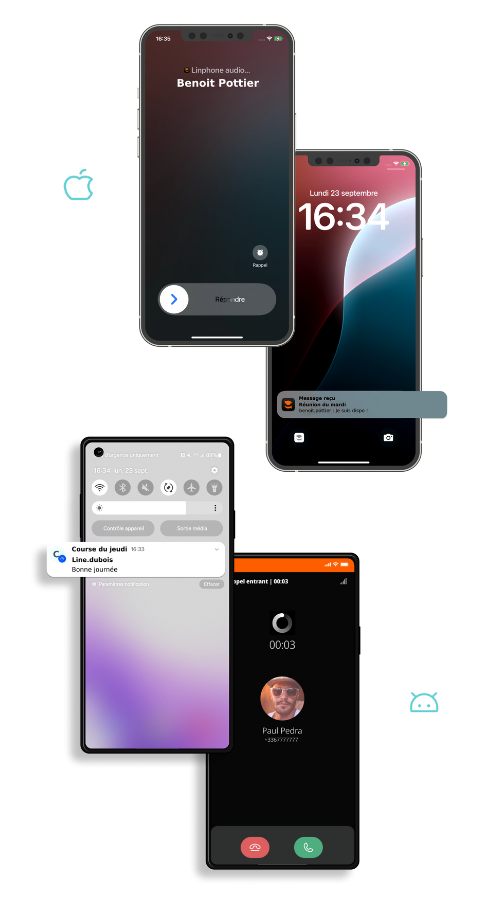
Toujours joignable sur mobile grâce aux notifications push
Soyez notifié d’un appel entrant sur Linphone même lorsque l’application n’est pas ouverte ou quand l’écran du téléphone est éteint.
Linphone est compatible avec les services de notifications push de Google (Firebase) et Apple (APNs) et suit de près leurs évolutions. Ne manquez aucun appel ou message entrant !
Seuls les comptes Linphone peuvent recevoir ce type de notifications. N’hésitez pas à nous contacter si vous souhaitez bénéficier de notre service de push.
Répondez ou refusez les appels entrants directement depuis l'écran verrouillé
Répondez ou marquez comme lu les messages entrants sans ouvrir l'application
Répondez aux appels Linphone directement depuis un appareil Bluetooth
Compatible avec Android Auto (messages) et Apple CarPlay (appels et messages) pour répondre aux appels et consulter vos messages directement depuis votre véhicule. Soyez prudent tout de même
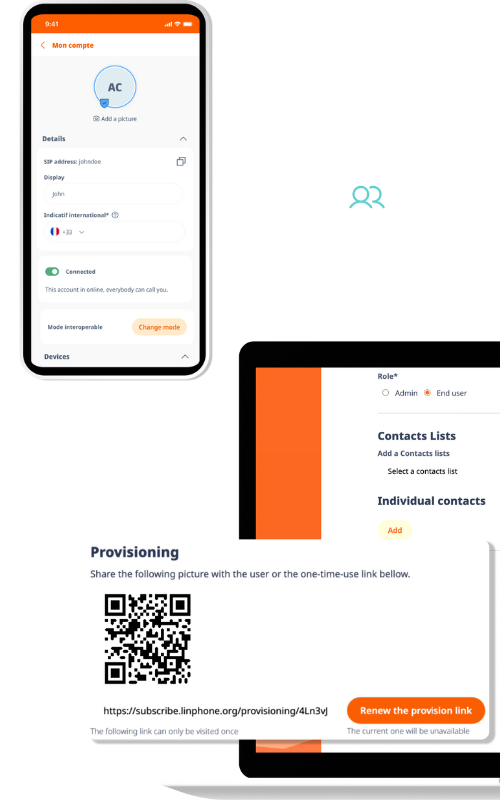
Configuration à distance
Facilitez le déploiement de Linphone auprès des utilisateurs
De nombreux paramètres de Linphone peuvent être adaptés en modifiant le fichier de configuration de l’application. Grâce à la configuration à distance, gagnez du temps lors du déploiement de vos comptes utilisateurs.
Par QRcode
Intégrez le fichier de configuration propre à chaque utiliseateur dans un QRcode pour un démarrage rapide.
Par lien cliquable
Envoyez aux utilisateurs un mail avec un lien unique pour importer leur fichier de configuration dans Linphone.
Gestion des fonctionnalités
Activez ou désactivez les fonctionnalités que vous mettez à dispositions de vos utilisateurs, par utilisateur ou pour tout le service.
Thème graphique
Activez par configuration distante un des thèmes graphiques proposés, ou contactez-nous pour en créer un spécifique à votre charte.
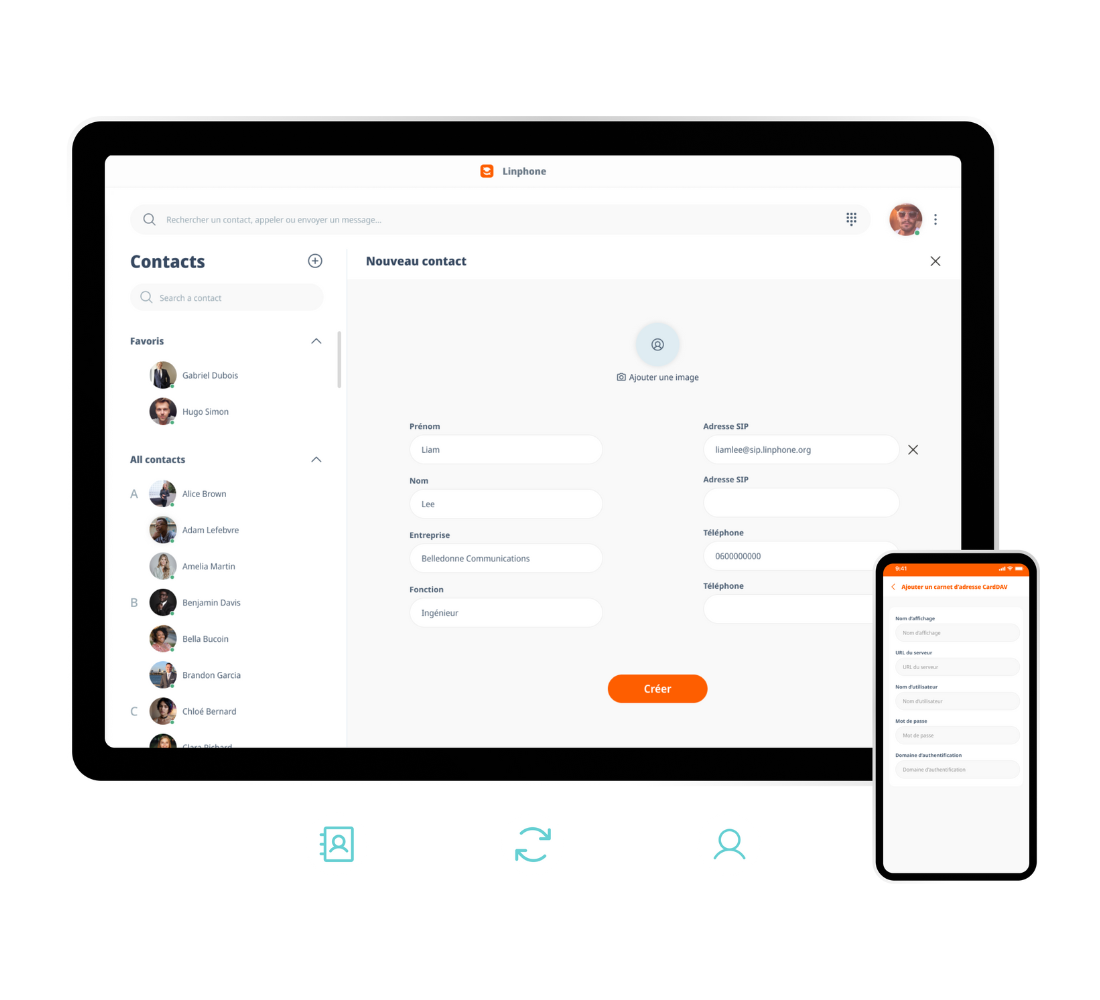
Gestion des contacts
Simplifiez la gestion de vos contacts avec LDAP et CardDAV
Carnet d'adresses intelligent
Sur mobile, le carnet d’adresses intelligent vous permet de repérer les contacts de votre téléphone disposant d’un compte SIP, permettant ainsi de les joindre via Linphone.
Synchronisation des contacts
La synchronisation des carnets de contacts basée sur les protocoles CardDAV ou LDAP permet une intégration facile avec les annuaires d’entreprise et les serveurs de contacts.
Interopérabilité et normes SIP
Compatibilité avec les normes récentes
- Supporte des extensions récentes du protocole SIP
- Intègre les derniers standards en matière de qualité des appels audio/vidéo et de chiffrement des communications
Interopérabilité avec les systèmes SIP
- S’intègre avec les infrastructures VoIP déjà en place.
- Maintient une interopérabilité avec les systèmes et appareils SIP plus anciens.
Téléchargez Linphone gratuitement
Testez Linphone sur tous vos appareils – mobile, tablette et ordinateur – pour profiter de toutes ses fonctionnalités !

Vous avez un besoin spécifique ?
Contactez-nous pour des développements personnalisés, l’ajout de fonctionnalités additionnelles ou tout autre besoin particulier.
Ressources

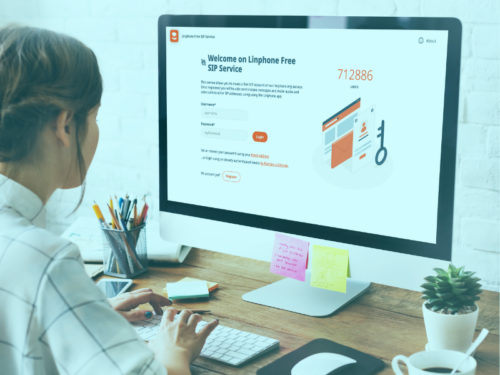
Bien démarrer
Découvrez Linphone en quelques étapes : téléchargez l’application et configurez votre compte ou intégrez notre technologie dans vos développements.

Livres blancs
Découvrez nos livres blancs sur la sécurité et les solutions d’interphonie pour découvrir comment Linphone répond à ces enjeux clés pour nos clients, utilisateurs et développeurs.
Espace dédié aux développeurs
Découvrez notre espace dédié aux développeurs souhaitant construire leur propre solution VoIP en s’appuyant sur la technologie du softphone Linphone.
Réserver une démo
Réservez une démonstration personnalisée avec notre équipe pour en savoir plus sur le fonctionnement de l’application Linphone.
Suite Linphone pour les entreprises
Explorez notre suite logicielle complète, spécialement conçue pour les organisations publiques et privées à la recherche d’une solution de softphonie clé en main.
📍 Nous trouver
Belledonne Communications,
3 Avenue Marie Reynoard,
38100 Grenoble
FRANCE (🇫🇷)
Suivez-nous